How to Track Your Travel History: Find Every Past Trip
How to find and track your travel history: rebuild past trips from passport stamps, airline emails, phone timelines and border records, then keep one dated list.
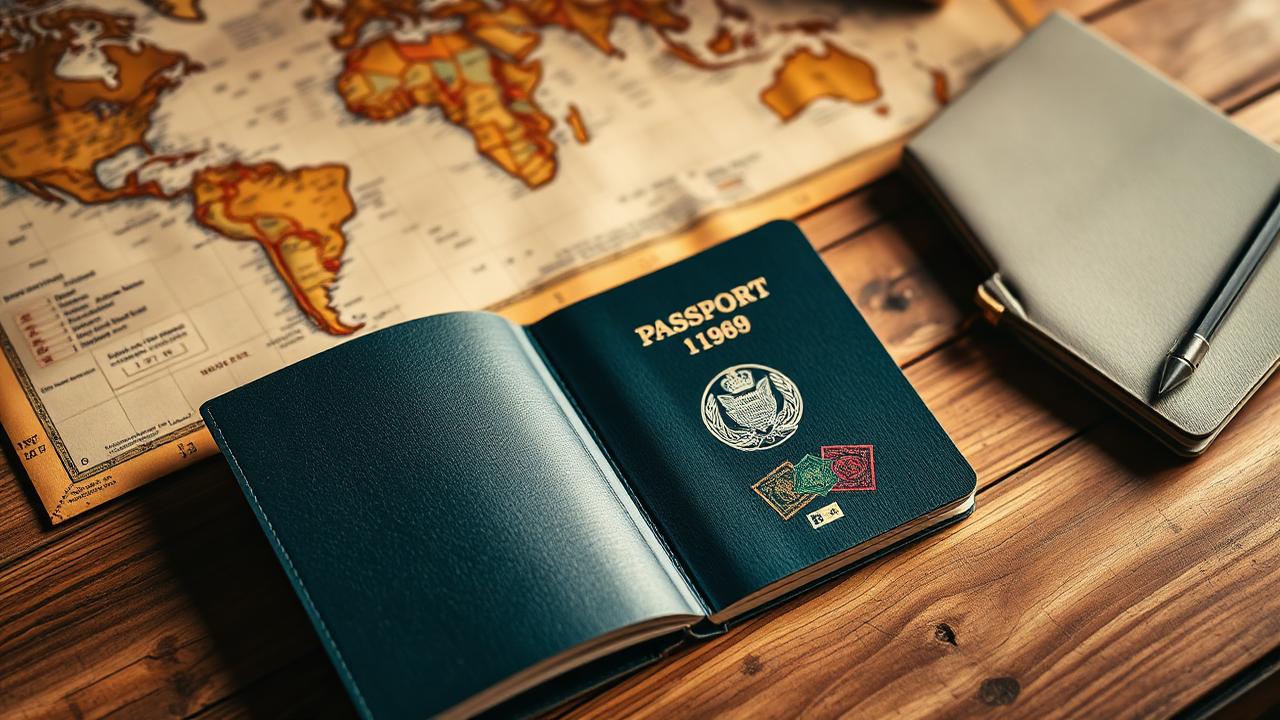
Sooner or later something asks you for your travel history: a visa form wanting every country you've entered in the last ten years, a residency application asking for exact entry and exit dates, an accountant checking how many days you were out of the country, or simply your own curiosity about where the last decade went. Almost nobody has that list ready. This guide covers both halves of the problem — how to reconstruct the trips you've already taken, and how to keep the record current from now on so you never have to do it twice.
First, decide how far back you need to go
Before you dig, set the scope. Most visa applications ask for five or ten years of travel. Citizenship and permanent-residency applications tend to want the full period of residence and often exact day counts. Schengen short-stay rules only care about the rolling last 180 days. Tax residency usually turns on days present in a single calendar or fiscal year. Knowing which window applies stops you from spending a weekend recovering a 2011 weekend break that no one will ever ask about.
Where your past trips are hiding
Your travel history already exists — it's just scattered across half a dozen places. Work through these in order, because the early sources are the most reliable:
Passport stamps. Still the most direct evidence for the countries that use them. Photograph every stamped page in good light, then transcribe each stamp into a spreadsheet or app: country, date, and whether it was an entry or an exit. Stamps are often smudged or overlapping, so treat anything unclear as a date to confirm from another source. Note that many borders no longer stamp at all — intra-Schengen travel, most domestic and common-travel-area routes, and increasingly automated e-gates leave no ink.
Airline and booking emails. Search your inbox for terms like "booking confirmation", "e-ticket", "itinerary", "boarding pass" and "check-in". This is usually the single richest source, because it gives you the date, the route, and the airline in one place. Check every address you've used over the years, including old work accounts.
Airline and hotel loyalty accounts. Frequent-flyer statements list flown segments going back years, and hotel programs list stay dates. These are useful because they show what you actually flew, not just what you booked.
Card and bank statements. When a flight doesn't appear anywhere else, the payment usually does. Statements also help pin down the day you actually arrived or left when a stamp is illegible.
Your phone's location timeline. If you had location history switched on, your phone almost certainly knows which city you woke up in on any given date. It's excellent for filling gaps and settling arguments about exact arrival days.
Photos. Every photo carries a date, and most carry a location. Sorting your camera roll by date is a surprisingly fast way to spot a trip you'd completely forgotten.
Official border records. Some countries let you request your own crossing records — the United States publishes I-94 arrival and departure history online, Australia and several others release movement records on request, and the EU's Entry/Exit System is progressively digitising non-EU crossings. These take time to obtain but carry more weight than anything you assemble yourself.
Build one list, in one format
Once you have the raw material, consolidate it into a single dated list rather than leaving it spread across sources. For each trip record: country, city of entry, entry date, exit date, purpose of visit (tourism, work, study, family), and the flight or crossing that took you there. Sort strictly by date, oldest to newest — that's the order nearly every official form expects, and it makes gaps obvious.
Gaps are the point of the exercise. When the list is in date order, a missing exit or an impossible overlap jumps out immediately, and you can go back to the sources to resolve it while you still have the tabs open.
What to do when you genuinely can't remember
You will hit dates you cannot pin down. Don't guess silently. Use the most conservative defensible date supported by evidence, mark the entry as approximate in your own notes, and keep whatever proof you do have attached to it. If a form requires exact dates and your evidence only supports a range, say so on the form rather than inventing precision — an honest approximation is treated very differently from an inconsistency a case officer finds later.
Keep it current: the two-minute habit
Reconstructing years of travel is painful once. Keeping it current is trivial. Log a trip when you book it — destination, entry date, expected exit date, purpose — and add the flight details from the confirmation email at the same time. When you get home, spend two minutes confirming the actual exit date and adding a line about what you did. That's the whole habit, and it means you'll never rebuild a decade again.
Scanning helps here. Rather than typing, you can upload a boarding pass, an itinerary PDF, or a screenshot of a confirmation email and let the details be read off it automatically — airline, flight number, airports, dates. It turns logging a trip into a few seconds of work.
Why a self-kept record isn't proof — and why it still matters
Be clear about what your own list is: an organised summary, not an official document. No consulate treats a personal spreadsheet or an app export as evidence on its own. What it does is let you fill in forms accurately and fast, spot the gaps before an officer does, and point straight to the underlying proof — the stamp, the boarding pass, the visa — for any trip that's questioned. That's exactly the role it should play.
A quick checklist
Set your date range based on what you're applying for. Gather stamps, emails, loyalty statements, card statements, phone timeline and photos. Consolidate everything into one date-ordered list with entry and exit dates. Resolve gaps and overlaps now, not later. Attach supporting documents to each trip. Then log every new trip as it happens.
TripoWay was built around that workflow — a private, date-ordered atlas of everywhere you've been, with flights, entry and exit dates, notes, and an export you can bring to an application. Start by adding the last trip you took; the rest fills in faster than you'd expect.
See the sample for yourself
Download the free TripoWay sample travel report and preview the format before building your own history.
Keep reading
- Travel History Tips for International Students
Travel history tips for international students: track study-abroad trips, home visits, and absences needed for permits, visas, and residency applications.
- Landing in a New Country? Sort These 5 Things First
SIM or eSIM, airport-to-city transport, luggage lockers, payments and insurance: the five things to sort in your first hours in a new country.
- Do You Need Travel History for a Visa Application?
Which visa applications ask for your travel history, how many years you need to declare, and how to compile exact entry and exit dates without guessing.