The Ultimate International Travel Checklist and Packing Guide
A complete international travel checklist and packing list: documents, visas, eSIMs, carry-on essentials and a capsule wardrobe formula that avoids baggage fees.
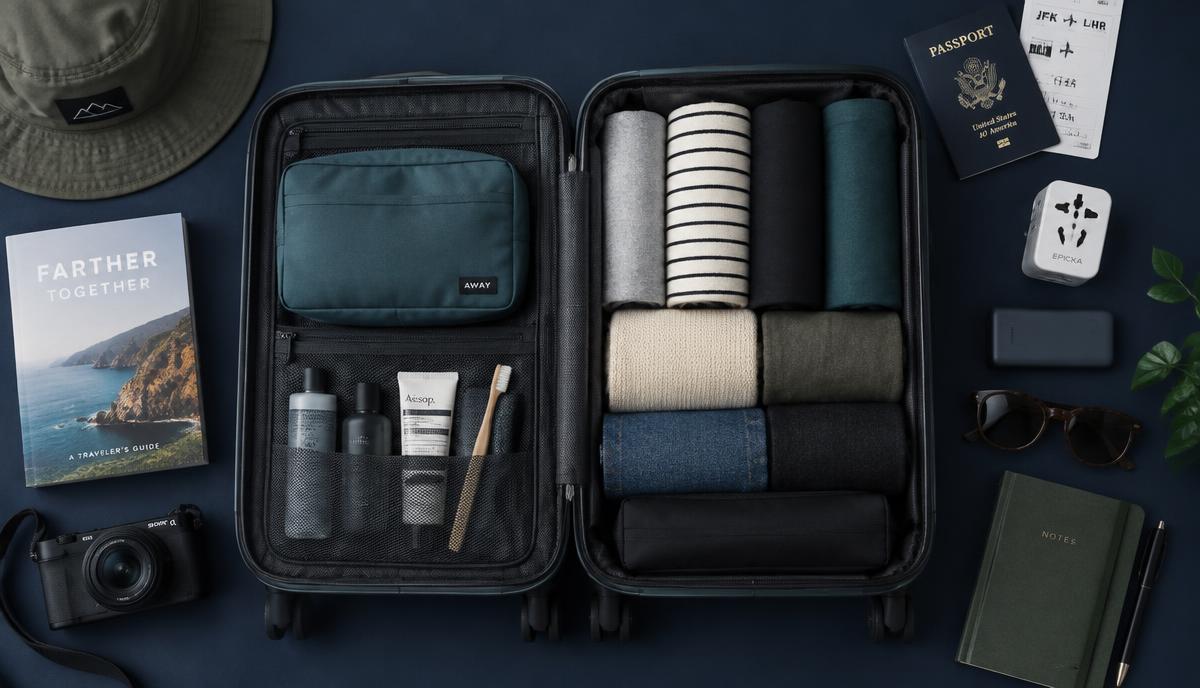
Most travel stress is not caused by the trip. It is caused by the last 48 hours before it: the passport you did not check, the adapter you did not buy, the booking confirmation buried somewhere in your inbox. This checklist splits everything into three phases so nothing lands on departure morning, then gives you a packing system that fits in a carry-on.
Phase 1: Four to Two Weeks Out — Documents and Entry Rules
**Check your passport's expiry date, not just that you have one.** A large number of countries require at least six months of validity beyond your date of entry, and several also want two blank facing pages. Airlines enforce this at check-in, which is the worst possible place to discover it.
**Confirm the entry requirement for your passport, not for the country in general.** Visa rules are per-nationality. Check whether you need a visa, an electronic authorisation (such as ETA or ESTA style systems), or nothing at all, and whether an online arrival or customs declaration must be filed in advance.
**Count your allowance if you are heading to Europe.** Short-stay visitors can spend a maximum of 90 days inside the Schengen Area in any rolling 180-day period, shared across all member countries. Arrival and departure days both count as full days. Work out the remaining balance before you book anything non-refundable — TripoWay's free calculator does the counting for you.
**Arrange travel medical insurance.** For Schengen visa applications it is mandatory, with a minimum of €30,000 in medical cover. Everywhere else it is simply the difference between an inconvenient week and a financially serious one.
**Book what gets more expensive, not cheaper.** Long-haul flights, trains on popular cross-border routes, and the first two nights of accommodation. Leave the rest flexible.
Phase 2: Seventy-Two to Twenty-Four Hours Out — Money and Technology
**Set up mobile data before you fly.** An eSIM installed and activated at home means maps, ride-hailing and messaging work the second you land, with no airport kiosk queue and no roaming bill. Do this while you still have reliable wifi — activation occasionally needs a retry.
**Tell your bank, and carry a backup.** Some cards still freeze on a first foreign transaction. Carry a second card from a different network, plus a small amount of local cash for taxis and markets that quietly refuse cards.
**Download everything offline.** Offline maps for each city, your transit app, your boarding passes, and a copy of your passport, insurance policy and accommodation addresses. Assume you will have no signal at the moment you most need them.
**Plan your luggage gaps.** If you have a long layover, an early arrival before check-in, or a late flight after checkout, book luggage storage in advance rather than dragging a suitcase around a city for six hours.
Phase 3: Departure Day — Flights and Boarding
Re-check the terminal and gate the morning of travel, since both change more often than the departure time. Arrive three hours early for long-haul international flights and two for short-haul. Keep your passport, boarding pass and phone in one dedicated pocket you never change — the single best way to avoid the pat-down panic at security.
Before you leave the house, capture your itinerary somewhere you can reach without wifi. Scanning your boarding pass into TripoWay takes a few seconds and stores the flight, date and route permanently, which turns out to matter months later when a visa form asks for exact dates.
The Carry-On Survival Pod
Whatever happens to your checked bag, these travel with you in the cabin:
Passport and any visa paperwork; one spare outfit and underwear; essential medication in its original packaging with the prescription; a universal adapter; a power bank; your charging cables; a refillable water bottle; a pen for landing cards; and the toiletries you would genuinely miss for 24 hours.
**One airline rule worth knowing:** lithium power banks must travel in the cabin, never in checked luggage, and most airlines cap them around 100Wh (roughly 27,000mAh) without prior approval.
The Capsule Wardrobe Formula
The simplest system that works for a one- or two-week trip is 5-4-3-2-1: five tops, four bottoms, three layers or outerwear pieces, two pairs of shoes, and one smarter outfit for a nice dinner or a gallery. Choose one neutral base colour so everything mixes, pack fabrics that do not crease, and roll rather than fold.
Wear your heaviest shoes and jacket on the plane. Assume you will do one load of laundry rather than packing for every day — almost every accommodation type in the world can solve laundry within a day.
Toiletries and Health
Liquids in hand luggage still follow the familiar rule at most airports: containers of 100ml or less, in a single transparent one-litre bag. Solid shampoo, toothpaste tablets and a bar of soap remove the problem entirely and save space.
Pack a small personal kit: painkillers, rehydration sachets, plasters, antihistamines, any prescription medication with documentation, and motion sickness tablets if you are taking ferries or mountain roads.
Keep the Digital Side Organised
Screenshotting confirmations feels efficient until you are at a border desk scrolling a camera roll of 400 photos. Keep bookings in one place instead: paste a confirmation email or scan a boarding pass into TripoWay and the trip, dates and route are created for you automatically, including return legs.
The payoff comes later. When a visa application asks for five or ten years of travel history, or a border officer asks exactly when you last left the Schengen Area, you have a dated record instead of an archaeology project.
Work through the three phases, pack the survival pod, and the only thing left to do on departure morning is leave the house.
Frequently asked questions
- What should be on an international travel checklist?
- At minimum: a passport valid for at least six months beyond your entry date, any required visa or travel authorisation, travel medical insurance, booked flights and first-night accommodation, an activated eSIM or roaming plan, offline maps and copies of key documents, a second payment card, and a small amount of local cash.
- Why do countries require six months of passport validity?
- The rule gives border authorities a buffer in case a visitor has to stay longer than planned. Many countries apply it strictly, and airlines check it at check-in, so renew your passport if it expires within six months of your return date.
- Can I bring a power bank on a plane?
- Yes, but only in your cabin bag — lithium batteries are not allowed in checked luggage. Most airlines permit power banks up to about 100Wh, roughly 27,000mAh, without special approval, and larger ones need airline permission.
- Should I buy an eSIM before I travel or after I arrive?
- Buy and install it before you travel, while you have reliable wifi. The plan usually starts when you first connect in the destination country, so you land with working data for maps and transport instead of hunting for airport wifi.
- What is proof of onward travel and do I need it?
- It is evidence that you will leave the country before your permitted stay ends — usually a return or onward flight, bus or train ticket. Airlines and border officers can ask for it on arrival in many countries, so keep a copy accessible offline.
- How much should I pack for a two-week trip?
- A carry-on is usually enough. The 5-4-3-2-1 formula — five tops, four bottoms, three layers, two pairs of shoes and one smarter outfit in a single neutral colour palette — covers two weeks when you plan on one laundry load mid-trip.
Check your Schengen days
Plug in your recent Europe trips and see exactly where you stand against the 90/180 rule.
See it in action
Try the scanner with a sample boarding pass — no upload, no camera, no account. We'll scan a fictional pass and show you the extracted trip in seconds.
Get connected before you land
Install an eSIM at home and your maps, messaging and ride-hailing work the moment the plane door opens — no kiosk queue, no roaming charges:
Affiliate links — we may earn a commission at no extra cost to you.
Somewhere to leave your bags
Long layover, early arrival or a late flight after checkout? Book vetted luggage storage near the station or your accommodation and explore hands-free.
Affiliate links — we may earn a commission at no extra cost to you.
Still pricing your flights?
Compare airlines, dates and connecting routes before you lock in the most expensive part of the trip:
Affiliate links — we may earn a commission at no extra cost to you.
Sort your travel medical cover
Schengen visa applications require at least €30,000 of medical cover, and everywhere else it is the difference between an inconvenient week and an expensive one. A quote takes about a minute.
Affiliate links — we may earn a commission at no extra cost to you.
Keep reading
- Top 7 Destination Dupes for 2026: Luxury Views, Backpacker Budget
Seven affordable destination dupes for 2026 — cheaper alternatives to the Amalfi Coast, Santorini, Tokyo and Barcelona, plus how to budget and log every trip.
- How to Plan Your First Solo Trip Across Europe
A step-by-step plan for your first solo trip to Europe: choosing a route, budgeting, trains and flights, staying safe, and tracking your Schengen 90/180 days.
- Landing in a New Country? Sort These 5 Things First
SIM or eSIM, airport-to-city transport, luggage lockers, payments and insurance: the five things to sort in your first hours in a new country.